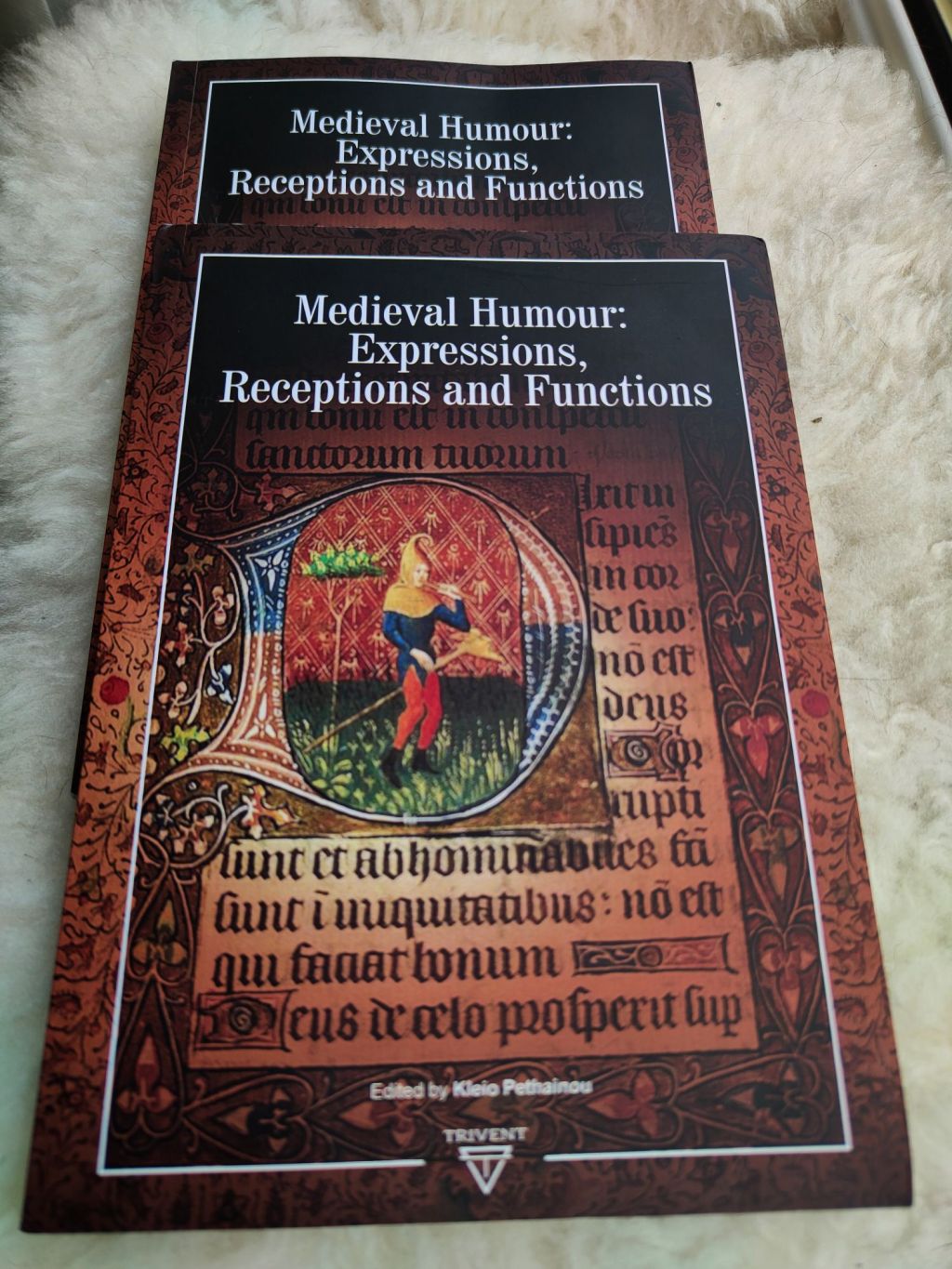
Over a year ago, I published a book I deeply believed in. It was called Medieval Humour: Expressions, Receptions and Functions, and it brought together six brilliant scholars to explore the comic side of the Middle Ages: from grotesque manuscript marginalia and gospel ’emojis’ to bawdy tales, nonsense scribbles and a knight who is basically Deadpool in armour.
It was bold, playful and serious all at once. It asked how medieval people laughed, what they laughed at, and why humour mattered.
And then… nothing happened.
I didn’t exactly expect it to become a bestselling sensation, but the book went from the printing press to academic oblivion with barely a ripple.
But this book deserves better
Because it contains vibrant proof that the Middle Ages were weird, witty and wickedly funny. Understanding that humour, in all its crude, clever and sometimes unsettling forms, is a wonderful insight into medieval minds.
So I’m doing what I didn’t do the first time around, when I was too consumed with finishing a PhD and didn’t think things through: relaunching the book properly.
Medieval Humour includes angels and monsters doodled in Gospel books, monks issuing warnings against excessive laughter, risqué illuminations that would raise eyebrows even now, and deadpan scribes sneaking nonsense into sacred texts. There is a cowherd who destroys his own oxen out of rage, and a knight so over the top he could headline a Marvel film.
If you’re in a university setting, I would be grateful if you requested a copy of Medieval Humour: Expressions, Receptions and Functions at your institutional library. You can also access the volume via JSTOR. If you’re not in academia but you know someone who teaches medieval literature, art, performance, or theology, please share this with them.
And if you simply enjoy the history of laughter and the unexpected weirdness of the past, read it. I promise you, it’s fun.
Medieval Humour: Expressions, Receptions and Functions is available via Trivent Publishing.
Free digital copies available for educators — just ask me!

Leave a comment